
GUIDANCE FOR STANDARD BIODIVERSITY OBJECTIVES
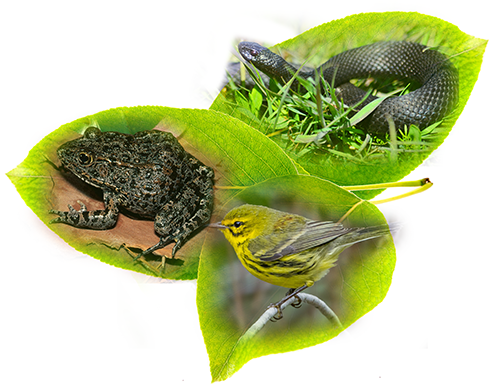 Sustaining biodiversity is core to the SFI 2022 Forest Management and Fiber Sourcing Standard objectives, which include requirements to manage for a range of conservation targets, including imperiled species and ecological communities, maintaining a diversity of wildlife habitats, and protection of riparian corridors. The SFI Standards require certified organizations to integrate biodiversity into planning, management, and harvesting operations to support healthy, resilient ecosystems and long‑term forest sustainability across certified managed forests and fiber supply regions.
SFI guidance supports implementation of the SFI Standards by providing context, examples, and practical tools that help organizations understand intent and apply best practices. Together, the SFI Standards and guidance enable continual improvement while allowing flexibility across regions and management approaches.
Read the current guidance in the SFI 2022 Standard objectives related to biodiversity:
Objective 4. Conservation of Biological Diversity
To maintain or advance the conservation of biological diversity at the stand- and landscape-level and across a diversity of forest and vegetation cover types and successional stages including the conservation of forest plants and animals, aquatic species, threatened and endangered species, Forests with Exceptional Conservation Value, old-growth forests, and ecologically important sites.
Performance Measure 4.1. Certified Organizations shall conserve biological diversity.
Indicators:
- Program to incorporate the conservation of biological diversity, including native species, wildlife habitats and ecological community types at stand and landscape levels, through the use of best scientific information including the incorporation of research results.
- Development of criteria and implementation of practices, as guided by regionally based best scientific information, to retain stand-level wildlife habitat elements such as snags, stumps, mast trees, down woody debris, den trees and nest trees.
- Program to individually and/or through cooperative efforts such as SFI Implementation Committees, support diversity of native forest cover types and age or size classes that enhance biological diversity, by incorporating the results of analysis of documented diversity at landscape and ownership/tenure levels, to ensure the contribution of the managed area to the diversity of conditions that promote biodiversity.
- Certified Organizations shall individually and/or through cooperative efforts such as SFI Implementation Committees, participate in or incorporate the results of credible, relevant state, provincial, or regional conservation planning and priority-setting efforts to conserve biological diversity and incorporate the results of these efforts in forest management planning. Credible priority-setting efforts include state and provincial wildlife action plans, state forest action plans, relevant habitat conservation plans, provincial wildlife recovery plans, Indigenous planning processes or ecoregional plans.
- Program to address conservation of ecologically important species and natural communities.
- Identification and protection of non-forested wetlands, including bogs, peatlands, fens and marshes, and vernal pools that are ecologically important.
- Participation in programs and demonstration of activities as appropriate to limit the introduction, spread and impact of invasive species that directly threaten or are likely to threaten native plant and animal communities.
- Consider the role of natural disturbances, including opening size, structural retention, the use of prescribed or natural fire where appropriate, and forest health threats in relation to biological diversity when developing forest management plans.
Performance Measure 4.2. Certified Organizations shall protect threatened and endangered species, critically imperiled and imperiled species (Forests with Exceptional Conservation Values), and natural communities, and old-growth forests.
Indicators:
- Program to protect threatened and endangered species.
- Program to locate and protect known sites of flora and fauna associated with viable occurrences of critically imperiled and imperiled species and ecological communities, defined as Forests with Exceptional Conservation Value. Programs for protection may be developed independently and/or through cooperative efforts involving SFI Implementation Committees and may include Certified Organization managers, cooperation with other stakeholders, or use of easements, conservation land sales, exchanges, or other conservation strategies.
- Support of and participation in programs for the conservation of old-growth forests in the region of ownership or forest tenure.
Performance Measure 4.3. Certified Organizations shall manage to protect ecologically important sites in a manner that takes into account their unique qualities.
Indicators:
- Use of information such as existing NatureServe or natural heritage data or expert advice in identifying or selecting ecologically important sites for protection.
- Appropriate mapping, cataloging and management of identified ecologically important sites.
Performance Measure 4.4. Certified Organizations shall apply knowledge gained through research, science, technology, field experience and the results of monitoring of the effectiveness of conservation-related programs to manage wildlife habitat and contribute to the conservation of biological diversity.
Indicators:
- Collection of information on Forests with Exceptional Conservation Value and other biodiversity-related data through forest inventory processes, mapping, or participation in external programs, such as NatureServe, state or provincial heritage programs, or other reputable organizations. Such participation may include providing non-proprietary scientific information, time, and assistance by staff, or in-kind or direct financial support.
- A program to incorporate data collected, research results and field applications of biodiversity and ecosystem research into forest management decisions.
- Individually or collaboratively participate in or support research that demonstrates the conservation outcomes resulting from management strategies.
Guidance to SFI 2022 Standards and Rules Section 7: Objective 4 Conservation of Biological Diversity
Guidance for Objective 4. Conservation of Biological Diversity
Conservation of Biological Diversity
The intent of Performance Measure 4.1 is to ensure that Certified Organizations use the best scientific information available to inform their action at multiple scales, for the purposes of biodiversity conservation. The individual indicators specify how this should be executed.
Several indicators suggest the use of best scientific information. This is intended to drive the utilization of credible sources to determine landscape-level priorities, facilitate assessments, and ultimately maximize the potential of the managed area to contribute to landscape level biodiversity, within the context of management objectives. Credible sources of science information include (but are not limited to) The Nature Conservancy ecoregional plans, NatureServe biodiversity metrics, and others.
Assessments conducted under Performance Measure 4.1, or any assessments consulted to meet the requirements of Performance Measure 4.1, should inform efforts to maintain or advance biodiversity conservation at multiple scales, including landscape scale. Indicator 4.1.3 references documentation of biodiversity at landscape and ownership levels, and incorporation of such documentation “to ensure the contribution of the managed area to the diversity of conditions that promote biodiversity.” Such documentation is increasingly available through remote sensing sources, NatureServe biodiversity metrics (a project of SFI), The Nature Conservancy, Forest Inventory and Analysis (U.S.), and/or Canadian Forest Service. It may be possible for a Certified Organization to develop its own documentation of diversity at this scale, though credibility is likely enhanced by participating in a broader collaborative process.
To achieve the intended goal of contributing to biodiversity conservation at landscape scale, managers will need to evaluate the required “documentation of biodiversity at landscape and ownership/tenure levels” in the context of their own management strategies and objectives, to determine whether there may be opportunities to fill gaps in their biodiversity outcomes, or to provide certain forest composition, age-classes, or conditions that may be lacking on the landscape. Indicator 4.1.4 cites “planning and priority-setting efforts” to help managers understand conservation priorities that have been independently and scientifically established, and “incorporating results” into their own planning. Indicator 4.1.4 provides a list of credible sources to aid in that process — these sources often intersect or dovetail with the landscape biodiversity assessments noted above.
One example of a credible prioritization effort at large scale is the “Forests for the Birds” project, collaboratively developed by SFI, the American Bird Conservancy, and multiple Certified Organizations. The results of this project should be considered appropriate to meet the intent of Indicator 4.1.4 by informing management strategies for the conservation of wide-ranging bird species.
A credible analysis of the contributions of a given managed area to biodiversity conservation may contain certain commonly understood forest metrics, such as stand age and size-class distribution. Certain imperiled species, such as the Red Cockaded Woodpecker (in the U.S. South), may have life cycle requirements related to tree size and distribution — in this case, larger diameter trees. Analysis and planning therefore could include an assessment of the range maps or habitat prediction models of species that may be dependent on such conditions. In this way, managers can develop strategies to enhance habitat for species with known requirements, and potentially elevate the contribution of their managed area toward landscape goals within the context of overall management objectives, using well-established metrics beyond just the forest cover type.
An advantage of using credible planning and priority-setting frameworks, such as those noted above, is that multiple elements and scales of biodiversity analysis are already inherent to these constructs. For example, the NatureServe biodiversity metrics approach (a project in collaboration with SFI and multiple Certified Organizations) includes metrics relative to “landscape condition” and “species assemblages,” effectively addressing “connectivity” and “natural communities” respectively. The metric of “Landscape Spatial Pattern” effectively speaks to both “fragmentation” and “connectivity” as inherent attributes of biodiversity at multiple scales.
Analyses of landscape conditions and opportunities may be conducted collaboratively by multiple Certified Organizations, or in partnership with SFI Implementation Committees that operate across multiple certified ownerships. Forest managers can use these analyses to implement more efficient strategies for addressing landscape scale conservation or biodiversity assessments, improving outcomes while remaining true to the management objectives of individual Certified Organizations.
Forests with Exceptional Conservation Value
Objective 4 of the SFI 2022 Forest Management Standard extends the biodiversity requirements to Forests with Exceptional Conservation Value (FECV).
Indicator 4.2.2 requires that Certified Organizations with FECVs have a program to locate and protect known sites of flora and fauna associated with viable occurrences of critically imperiled and imperiled species and communities. An imperiled or critically imperiled plant, animal, or community is one that is globally rare or vulnerable to extinction. Protection plans may be developed independently by Certified Organization management, or in cooperation with other stakeholders, and may include the use of easements, conservation land sales, exchanges, or other conservation strategies.
Definition of Forests with Exceptional Conservation Value: critically imperiled (G1) and imperiled (G2) species and ecological communities.
Critically imperiled: A plant or animal or community, often referred to as G1, that is globally extremely rare or, because of some factor(s), especially vulnerable to extinction. Typically, five or fewer occurrences or populations remain, or very few individuals (<1,000), acres (<2,000 acres or 809 hectares), or linear miles (<10 miles or 16 kilometers) exist.
Imperiled: A plant or animal or community, often referred to as G2, that is globally rare or, because of some factor(s), is very vulnerable to extinction or elimination. Typically, six to 20 occurrences, or few remaining individuals (1,000 to 3,000), or acres (2,000 to 10,000 acres or 809 to 4047 hectares), or linear miles (10 to 50 miles or 16 to 80.5 kilometers) exist.
In the United States and Canada, Certified Organizations can use the NatureServe database to identify species and communities for protection. Learn more about NatureServe Conservation Status Assessments.
NatureServe Resources for Global and Occurrence Ranks
Identification and protection of critically imperiled and imperiled species and communities is a stepwise process. First, NatureServe determines the global rank, which reflects the rarity/imperilment of the species or community. Then it assesses the estimated viability, or probability of persistence, of particular occurrences of critically imperiled and imperiled species and communities. A viable species or community is one that is of sufficient quality to likely survive long-term. Clearly, little conservation benefit is gained unless protected occurrences have a good likelihood of long-term survival.
NatureServe inventory and conservation activities focus on locating, maintaining records on, and working with partners to conserve viable occurrences of conservation elements. NatureServe and its network of natural heritage programs rank the viability of element occurrences (either community or species) using standard methodologies to yield an element occurrence ranking. They develop and maintain a standard set of element occurrence rank specifications for each element, and then apply them against individual occurrences of the element.
The basic element occurrence ranks are:
A: Excellent estimated viability
B: Good estimated viability
C: Fair estimated viability
D: Poor estimated viability
E: Verified extant (viability not assessed)
H: Historical
F: Failed to find
X: Extirpated
The SFI 2022 Forest Management Standard requires that Certified Organizations have a “program to address conservation of ecologically important species and natural communities, including those that are locally rare.”
Under the SFI 2022 Forest Management Standard, occurrences of critically imperiled and imperiled species and communities ranked as A and B are to be protected. C-ranked occurrences should be reviewed and addressed on a case-by-case basis. If they have greater potential to be viable (C+), they should be protected. If they have less potential for viability (C-), they should be managed at the Certified Organization’s discretion.
Element occurrences with poor estimated viability (D) would not be protected under the SFI 2022 Forest Management Standard. A D rank might result because the acreage of a community or the population of a species is too small, the quality is very low, and/or the ecological processes required to maintain the occurrence are fundamentally altered and un-restorable. E-ranked occurrences (viability not assessed) should be presumed viable and protected until they are assessed, and then protected or not accordingly. Occurrences ranked F are not covered under the SFI 2022 Forest Management Standard since only known occurrences are included. Historical (H) and extirpated (X) occurrences are clearly nonviable, and no protection activity is warranted.
In determining the viability and potential to protect occurrences, Certified Organizations are encouraged to seek additional information on occurrence ranking from NatureServe and/or collaborate with qualified conservation experts.
Occurrence Quality
The following material provides additional information on the standards and methodologies employed by NatureServe in determining the quality or viability of occurrences.
For an ecological assessment, scientists and managers want to know if each occurrence is of sufficient quality, or feasibly restorable, before including it in management planning. With adequate information, ecologists evaluate and rate the quality of element occurrences using criteria grouped into three categories: size, condition, and landscape context. Characterizing these qualities provides the basis for assessing the stresses that occurrences may be experiencing (such as degradation or impairment) at a given site.
To assess the quality of element occurrences, ecologists must identify the key ecological factors (ecological processes, population abundance, disturbance regimes, composition, structure, etc.) that support them. Once these are identified, it is possible to describe their expected ranges of variation and assess whether the on-site factors are within those ranges or require significant effort to be maintained or restored to their desired status.
Key ecological factors vary by element type, but all are grouped into the three categories of size, condition, and landscape context. Each category is reviewed and ranked for each occurrence as A (excellent), B (good), C (fair), and D (poor). The break between C and D establishes a minimum quality threshold for occurrences. Occurrences ranked D are typically presumed to be beyond practical consideration for ecological restoration. In subsequent management planning, these ranks and underlying criteria aid in focusing conservation activities and measuring progress toward local conservation objectives.
The categories are defined as follows:
Size is a measure of the area or abundance of a conservation element’s occurrence. It may simply be a measure of the occurrence’s patch size or geographic coverage, or it may include an estimate of sub-population size or density. One aspect, the minimum dynamic area, is the area needed to ensure the survival or re-establishment of a population or community after a natural disturbance.
Condition is an integrated measure of the composition, structure, and biotic interactions that characterize an occurrence. This includes factors such as reproduction, age structure, biological composition (e.g., presence of native versus invasive species; presence of characteristic patch types), physical and spatial structure (e.g., canopy, understory, and groundcover; spatial distribution and juxtaposition of patch types or seral stages in an ecological system), and biotic interactions that directly involve the element (e.g., competition and disease).
Landscape context measures two factors: the dominant environmental regimes and processes that establish and maintain the element occurrence, and connectivity. Dominant environmental regimes include hydrologic and water chemistry regimes (surface and groundwater), geomorphic processes, climatic regimes (temperature and precipitation), fire regimes, and natural disturbances. Connectivity includes such factors as species elements having access to habitats and resources needed for lifecycle completion, the fragmentation of ecological communities and systems, and the ability of any element occurrence to respond to environmental change through dispersal, migration, or re-colonization. The criteria for ranking ecological communities vary by type. In many instances, criteria are developed for ecological systems, then modified (mostly with size attributes) for application to occurrences of individual rare plant associations that may occur among the more broadly defined ecological system.
Guidance on Incorporation of Ecosystems in the SFI 2022 Forest Management Standard
In the SFI 2022 Forest Management Standard, the term “ecosystem” or “ecosystems” is referenced in several different objectives and indicators, yet guidance on how the concept of ecosystems should be integrated into sustainable forestry is lacking. Ecosystems represent the integration of biotic (e.g., plants, animals) and abiotic (e.g., soils, water) elements of the environment. In the context of sustainable forestry, key components of ecosystems include: 1) forest composition; 2) forest structure; 3) connectivity across landscapes; and 4) how ecological processes like competition, nutrient cycling, or herbivory influence the sustainability of forest ecosystems.
Sustainable forestry is based on applying management at multiple scales, with most Certified Organizations operating at stand to landscape scales. The guidance provided is not a template for ecosystem management – it relies on the currently accepted SFI definitions and approved requirements of the SFI 2022 Forest Management Standard to demonstrate how ecosystems are an integral component of sustainable forest management. However, the guidance is consistent with the four key components of ecosystems listed above.
Integrating the Biotic and Abiotic Elements of the Environment
The foundation for landscape scale mapping and planning that incorporates ecosystems into sustainable forest management includes a combination of forest cover type and soils maps, supplemented by non-timber information like non-forested wetlands and Forests with Exceptional Conservation Value. Certified Organizations are required to have a land classification system (Indicator 1.1.1c), soils inventory and maps, where available (Indicator 1.1.1e, Performance Measure 2.3), up-to-date maps or a geographic information system (Indicator 1.1.1g), and information on non-timber resources (Indicator 1.1.1i, Performance Measure 3.2, Indicators 4.1.6, 4.2.2, 4.2.3) as part of their forest planning processes. Certified Organizations also are required to integrate biotic and abiotic elements in forest conversion decisions (Indicator 1.2.2), forest regeneration (Performance Measure 2.1), and during implementation of forest protection activities (Performance Measure 2.4). Additionally, the conservation of biological diversity inherently integrates the biotic and abiotic elements of the environment through the accounting of wildlife habitats (Indicators 4.1.1, 4.1.2, 4.1.5), ecological community types (Indicators 4.1.1, 4.2.2, Performance Measure 4.3), biological diversity (Indicator 4.1.1), and Forests with Exceptional Conservation Value (Performance Measures 4.2 and 4.4).
Forest Composition
Forest composition is closely linked to abiotic factors like soil, microclimate, and moisture availability. Forest managers tend to think of composition
at three levels: 1) forest health and productivity (e.g., high growth rates, drought resistant, disease resistance) of planting or regeneration stock (the
“genetic” level”); 2) stand level considerations, including tree species composition, management of competing vegetation, and structural retention practices (Indicator 4.1.2); and 3) landscape scale considerations (across ownerships or across multiple ownerships – Indicators 4.1.3, 4.1.4) in terms of forest cover types or other land cover classes.
Forest Structure
Within forest stands, structure refers to several different characteristics, including the physical arrangement of trees, snags, and down woody debris. Within a stand and depending on the situation, Certified Organizations have criteria for the desired forest composition (Performance Measure 2.1), tree stocking
(Indicator 2.1.2), size distributions (Indicators 1.1.1a, 1.1.1h), retention of habitat elements (Indicator 4.1.2), protection of ecologically important sites
(Indicators 4.1.5, 4.1.6, Performance Measure 4.3), and protection of special sites (Objective 6). At larger scales, such as with multiple forest stands, forest structure is often based on differences in size/density or stand age (in even-aged management systems), as portrayed by a land classification system (Indicator 4.1.3). This land classification system often includes information on riparian zones and wetlands (Performance Measure 3.2). At even larger scales (e.g., landscapes), forest managers tend to portray the diversity of size, density, or age classes in management blocks, across entire ownerships, or in some instances across multiple ownerships (Indicator 4.1.3).
Connectivity
Integration of connectivity into sustainable forest management occurs through protection of wetlands and riparian zones (Performance Measure 3.2), provision of diverse forest cover types and structures (Indicators 4.1.2, 4.1.3), and protection of other ecologically important sites (Indicators 4.1.5, 4.1.6, Performance Measure 4.3). Connectivity can be assessed at multiple scales and can be thought of as “structural” or “functional.” Structural connectivity refers to forest cover types or habitats that are geographically adjacent , facilitating the ability of genes and species to move through a managed forest landscape. Functional connectivity refers to forest cover types or habitats that are not physically adjacent but are arranged in a landscape such that genes and species can move. The SFI 2022 Forest Management Standard contains indicators that both directly and indirectly influence connectivity via requirements for prompt forest reforestation (Performance Measure 2.1), limitations on clearcut harvest area sizes (Indicator 5.2.1), limitations on forest conversion (Performance Measures 1.2, 1.3), the protection of wetlands and riparian zones (Performance Measure 3.2), non-forested areas, and other ecological sites (Indicators 4.1.5, 4.1.6, Performance Measure 4.3), and through aesthetic considerations (Objective 5). In certain situations, some Certified Organizations may explicitly identify species of conservation concern that warrant direct assessments of connectivity (Performance Measure 4.2).
Ecological Processes
Ecological processes help sustain forest composition, structure, and connectivity. The SFI 2022 Forest Management Standard explicitly recognizes numerous important ecological processes that are important to sustainable forestry, including reforestation (Performance Measure 2.1), forest health (Performance Measure 2.4), hydrological function (Objective 3), and consideration of the role of natural disturbances (Indicator 4.1.8). In many certified forest landscapes, the ecological processes that sustain composition and structure are influenced by active or passive management activities including harvesting, reforestation, and maintenance or enhancement of biological diversity and wildlife habitat.
Wildlife Habitat Diversity, Ecologically Important Species, and Invasive Species
Objective 4 in the SFI 2022 Forest Management Standard includes performance measures and indicators for conservation of biological diversity. Additional information is provided here for wildlife habitat diversity and invasive species.
Wildlife Habitat Diversity
Performance Measure 4.1 in the SFI 2022 Forest Management Standard includes programs to incorporate conservation of biological diversity and recognize the value of a diversity of habitats to support aquatic species and wildlife. Early successional forest stages, for example, are particularly lacking in certain regions of the U.S. and Canada, and managing for them can aid in preventing the decline of species dependent on them (e.g., ruffed grouse). Historically, fires and other natural disturbances created forest openings and the types of habitat needed by these early succession forest dependent species. As forests across the landscape mature, this type of habitat declines in abundance. However, it can easily be created by the proper selection of harvesting methods, including clearcutting and the use of prescribed fire.
Ecologically Important Species
Indicator 4.1.5 requires a program to address conservation of ecologically important species and natural communities. Such ecologically important species or communities could include those that are locally rare in the area of operation, at the discretion of the Certified Organization. “Locally rare” is a term intended to give managers flexibility in interpretation, though managers are encouraged to consult objective sources (such as NatureServe G and S rank systems) to achieve consistent application of the concept. Specifically, “locally rare” could include species with a high “S-Rank,” indicating relative rarity within that jurisdictional area (e.g., state or province), or it could mean species that are at the fringes of their range, and thus relatively uncommon to that locality.
The intent of Indicator 4.1.5 is for Certified Organizations to; (1) evaluate conservation opportunities relative to species or communities that are not officially designated for protection by state, provincial, or federal law, or ranked G1 or G2 (and thus addressed through Forests with Exceptional Conservation Value); 2) identify ecologically important species for management attention; and (3) incorporate conservation actions for the selected species into management.
The term “ecologically important species” replaces the former term “viable occurrences of significant species of concern.” Ecologically important is a defined term, which can be applied to either species or natural communities (which is also now a defined term).
The intent is for conservation to occur on Certified Organization lands. Although Certified Organizations are not required to do surveys to determine
known occurrences, they should refer to available sources to identify the presence of ecologically important species or natural communities. Certified Organizations should look to the definition of ecologically important to help determine which species or natural communities should be considered under this indicator, in addition to considering their rarity, regional importance, and sensitivity to, or reliance upon, forest management activities. Resources
for determining rarity may include NatureServe G or S ranks, the International Union for Conservation of Nature Red List, and federal, provincial, or state lists. Resources for determining regional importance may include The Nature Conservancy ecoregional plans, State Wildlife Action Plans, or other credible conservation plans. Information regarding known occurrences (i.e., presence) can be drawn from NatureServe, state/provincial natural resource agencies, Conservation Data Centers, or other regional mapping efforts or assessments.
It should be noted that non-forested wetlands, bogs, fens, marshes, and vernal pools (cited for identification and protection in Indicator 4.1.6) are characterized by distinct natural communities and can thus be identified using the methods and sources noted above.
Ecologically important species or natural communities could include species that that are ranked G3 or S1-S3 by NatureServe, at the discretion of the forest manager, and may be based on potential opportunities for the managed area to aid in the recovery or perpetuation of that species (note that G1-G2 species are already afforded protection by definition and related requirements under Forests with Exceptional Conservation Value). For example, the Gopher tortoise (Goperhus polyphemus), ranked G3, is considered an ecologically important species across much of its range. Many forest managers in the Gopher tortoise’s range in the U.S. South include specific attention to the needs of that species in management planning.
Lists of “special concern species,” “rare species,” “species of greatest conservation need,” and other similarly described lists have been published
by state, provincial, and federal agencies, and others. This indicator is not intended to imply that any particular species on such lists should require management or protection, but that such lists should serve as a resource for the identification of ecologically important species or natural communities.
Ensuring that programs are in place for ecologically important species and natural communities provides forest managers with opportunities to address vulnerable, and locally rare, species in multiple ways. Certified Organizations are encouraged to work closely with non-governmental organizations, and state, provincial, and federal agencies, to advance conservation efforts collaboratively, and to mitigate the need for formal listing and regulatory protections under the Endangered Species Act (US), or the Species at Risk Act (Canada).
Invasive Species
Indicator 4.1.7 addresses invasive species.
Certified Organizations should become knowledgeable about invasive species within their area of operation. The expectation is that they will participate in cooperative efforts by others (e.g., government agencies or non-government environmental organizations) and work proactively within their own programs (e.g., through erosion control or seed selection for wildlife plots) to limit the introduction, impact, and spread of invasive species. Indicator 4.1.7 does not require a Certified Organization to eliminate invasive species on their land. In some places, invasive species are well established and eradication by the Certified Organizations is unrealistic.
Experts in this area believe the most effective means of addressing invasive species include:
- awareness building,
- monitoring,
- preventing new introductions, and
- eliminating new occurrences.
Certified Organizations should emphasize these as priorities in their programs. Forest practices that reduce the abundance of invasive species are preferred if they can be addressed within the context of the Certified Organization’s overall management objectives.
Application of Research to Forest Management Decisions
The intent of Performance Measure 4.4 is to ensure that the substantial investment of Certified Organizations toward research is resulting in advancements in the application of practices toward biodiversity conservation. Certified Organizations can participate in advancing this knowledge in multiple ways. Performance Measure 4.4 suggests the need for acquiring biodiversity-related data through inventory processes, mapping, and interaction with natural heritage programs, data centers, or NatureServe. The implication is that Certified Organizations can both utilize such data and also participate in the advancement of general understanding, by contributing their own data to be widely shared, where feasible and appropriate. This could include, for example, sharing element occurrence data with NatureServe data centers to augment understanding of species’ distribution. Participation could further include direct engagement in collaborative projects with non-governmental organizations, academic partners, and other Certified Organizations to increase understanding and advance common practice. Modes of implementation could include (but are not limited to):
- collaborative research participation, and sharing results, through SFI Implementation Committee engagement;
- participation in research projects with external partners, through direct engagement, SFI Conservation Grant projects, multilateral partnerships, etc.; or
- sharing of proprietary research results, as appropriate, to support the elevation of forest practices across the sector.
Objective 1. Biodiversity in Fiber Sourcing.
To address the practice of sustainable forestry by conserving biological diversity.
Performance Measure 1.1. Promotion and conservation of biological diversity.
Indicators:
- Certified Organizations shall address conservation of biodiversity, individually and/or through cooperative efforts involving SFI Implementation Committees, through a program that includes one or more of the following:
- promotion of biological diversity concepts utilizing information from organizations such as the World Resources Institute, The Nature Conservancy, NatureServe, Conservation International, State Wildlife Action Plans, State Forest Action Plans and assessments;
- conducting local and regional level landscape assessments;
- involvement with local or regional conservation efforts;
- use of relevant information on biological diversity from credible sources (such as those noted above) in approved training and education programs; and
Performance Measure 1.2. Promotion and conservation of Forests with Exceptional Conservation Value.
Indicators:
- Certified Organizations shall conduct an assessment, individually and/or through cooperative efforts involving SFI Implementation Committees, of Forests with Exceptional Conservation Value, defined as critically imperiled and imperiled species and ecological communities, within their wood and fiber supply area(s) and make the summary of the assessment available to wood producers.
- Program to address Forests with Exceptional Conservation Value (critically imperiled and imperiled species and ecological communities) for all harvest operations through fiber sourcing activities such as:
- use of qualified logging professionals, certified logging companies (where available), and qualified resource professionals; or
- training program for qualified logging professionals on how to recognize and protect Forests with Exceptional Conservation Value; or
- through in-the-forest verification by certified logging companies; or
- forest landowner outreach; or
- SFI Implementation Committee involvement in the assessment of Forests with Exceptional Conservation Value, and development of recommendations for conservation.
- Certified Organizations shall conduct and incorporate the results of a Forests with Exceptional Conservation Value (critically imperiled and imperiled species and ecological communities) assessment to promote conservation of Forests with Exceptional Conservation Value for purchased stumpage.
Objective 2. Adherence to Best Management Practices.
To broaden the practice of sustainable forestry through best management practices to protect water quality.
Performance Measure 2.1. Certified Organizations shall clearly define and implement policies to ensure that facility inventories and fiber sourcing activities do not compromise adherence to the principles of sustainable forestry.
Indicators:
- Use of written agreements for the purchase of raw material sourced directly from the forest is required and must include provisions requiring the use of best management practices.
- Program to address adverse weather conditions.
- Certified Organizations shall clearly define their fiber sourcing policies in writing and make them available to wood producers.
Guidance for Objective 1. Biodiversity in Fiber Sourcing
Performance Measure 1.2 is intended to promote conservation of Forests with Exceptional Conservation Value or forest areas that harbor or consist of imperiled or critically imperiled species or natural communities through the course of fiber sourcing activities. This promotion takes place through three means: 1) an assessment of Forests with Exceptional Conservation Value within the wood and fiber supply area, that is then made available to wood producers; 2) programs to address outreach and training; and, 3) incorporation of the results of the assessment toward promoting Forests with Exceptional Conservation Value conservation on areas of purchased stumpage. Considered together, these elements should effectively promote the intended conservation of Forests with Exceptional Conservation Value.
The required Forests with Exceptional Conservation Value assessment can be conducted at the scale of the wood and fiber supply area and may even be conducted collaboratively through one or more SFI Implementation Committees, or through multi-lateral engagement of Certified Organizations operating within the same affected geography, to achieve efficiencies of cost and scale. Such an assessment could be qualitative (i.e., describing the forest conditions and composition that would define Forests with Exceptional Conservation Value in that location) or geographic (i.e., mapping of known Forests with Exceptional Conservation Value through some credible method, such as remote sensing, use of USFS Forest Inventory and Analysis (FIA) data to achieve a meaningful scale for this purpose, sampling and ground-truthing, or other means). Forests with Exceptional Conservation Value assessments may be conducted most efficiently using the widest array of available information, including NatureServe or heritage database information, remote sensing, habitat prediction models and other means.
Performance Measure 1.2 is intended to inform activities at a meaningful level, to help promote conservation of Forests with Exceptional Conservation Value that could be affected through harvest activities, but it does not necessarily require stand-level analysis. The requirements of this performance measure should be considered together, meaning that the assessment results generate information that can be transferred to landowners and loggers through outreach and training programs, etc., facilitating the use of that information at the level of individual harvest. Using the assessment results at the scale of purchased stumpage is the most specific level of application, since Certified Organizations are responsible for understanding the details of sourcing at this scale and for ensuring the conservation of Forests with Exceptional Conservation Value at this scale, too.
View more biodiversity resources here.
SFI CONSERVATION IMPACT
SFI CONSERVATION RESEARCH
CLIMATE SMART FORESTRY
BIODIVERSITY AT SFI
SFI CONSERVATION GRANTS
Comments or Questions? Contact:
or visit our staff page for team members

