By Lizzie Mafrici, Senior Communications Coordinator at SFI
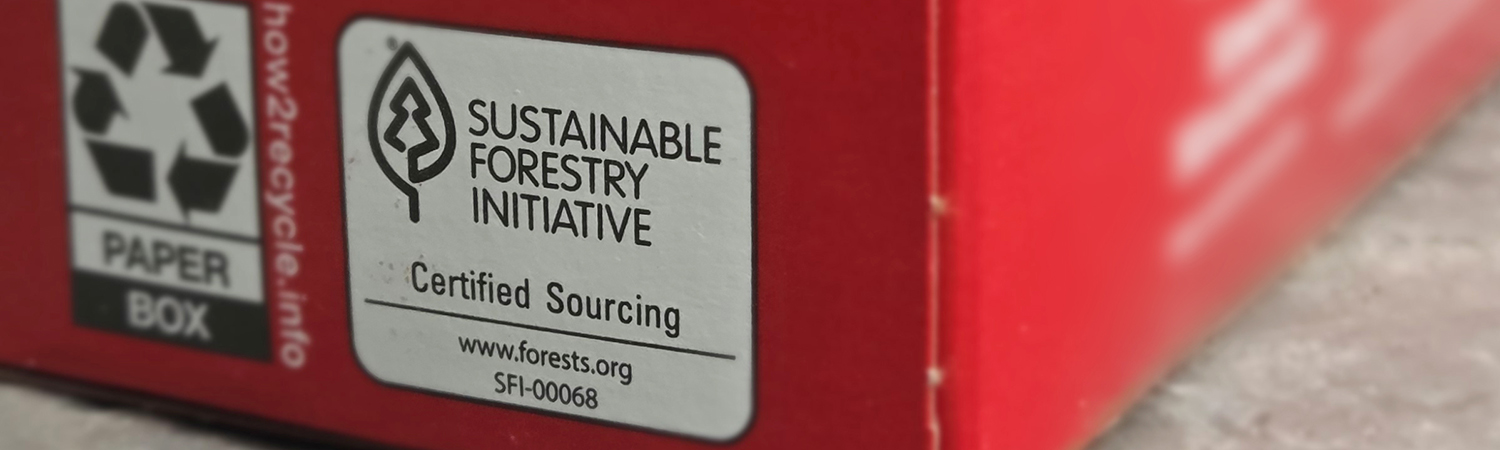
You may have seen the SFI label while picking up groceries, ordering takeout, purchasing paper products, or walking past a new construction site. It appears on many of the products we use every day, but what does it actually mean? For consumers, the SFI label provides trusted, third-party assurance that wood, paper, and fiber-based packaging come from a responsibly managed forest and help address risks such as illegal logging, deforestation, and forest degradation while supporting positive conservation outcomes.
An SFI on-product label represents much more than a product’s origin. It reflects a commitment to sustainable forest management that begins in the forest and continues throughout production and manufacturing of a forest product.
Forests are dynamic, living systems that grow, regenerate, and evolve over time. Sustainable forestry recognizes this natural cycle by balancing the production of renewable forest products with the conservation of wildlife habitat, water quality, biodiversity, and other ecosystem values. After harvest, forests are regenerated through reforestation, allowing forests to continue growing and providing environmental, social, and economic benefits for generations to come.
Long-term sustainable forest management also supports innovation. Today, wood fiber is being used in new ways to create everything from recyclable and compostable packaging to advanced building materials, bio-based alternatives to traditional products, and other solutions that can help reduce waste and lower environmental impacts. As companies continue to find new uses for renewable forest resources, SFI-certified forests provide the foundation for products that are not only practical and familiar, but also helping shape a more sustainable future.
Behind these forest products is a commitment to comprehensive forest stewardship. SFI-certified organizations are required to conserve biological diversity, protect ecologically important sites, and support long-term forest health through sustainable forest management practices. Beyond forest management operations, SFI Standards and programs help advance education, training, and outreach for forestry professionals, landowners, and local communities. These efforts, combined with practices that can improve resilience to wildfire and other disturbances, help support forests as they provide environmental, social, and economic benefits for generations to come.
As our understanding of forests and climate continues to evolve, sustainable forestry practices are evolving as well. The SFI 2022 Forest Management Standard includes objectives that support Climate Smart Forestry (Objective 9) and Fire Resilience and Awareness (Objective 10). Through the SFI Climate Smart Forestry Initiative, SFI is strengthening the connection between forest management, carbon stewardship, biodiversity conservation, and resilience. This work helps forests adapt to changing conditions while continuing to support the local communities that depend on them.
Responsible forestry extends beyond certified forest land. The SFI 2022 Fiber Sourcing Standard distinguishes SFI from other certification programs by governing how SFI-certified organizations procure fiber from non-certified forestlands, promoting sustainability across entire forest landscapes. Uniquely, this Standard requires SFI-certified organizations to conserve biodiversity, protect soil and water quality, support logger and forester training programs, provide landowner outreach, and invest in scientific research. These requirements help extend the benefits of responsible forestry beyond certified lands.
That commitment to responsible sourcing continues throughout the supply chain. Through the SFI 2022 Chain-of-Custody Standard, certified fiber can be tracked from responsibly managed forests through production and manufacturing to the final product. Annual independent third-party audits verify conformance with SFI Standard requirements, helping promote transparency and accountability from forest to finished product.
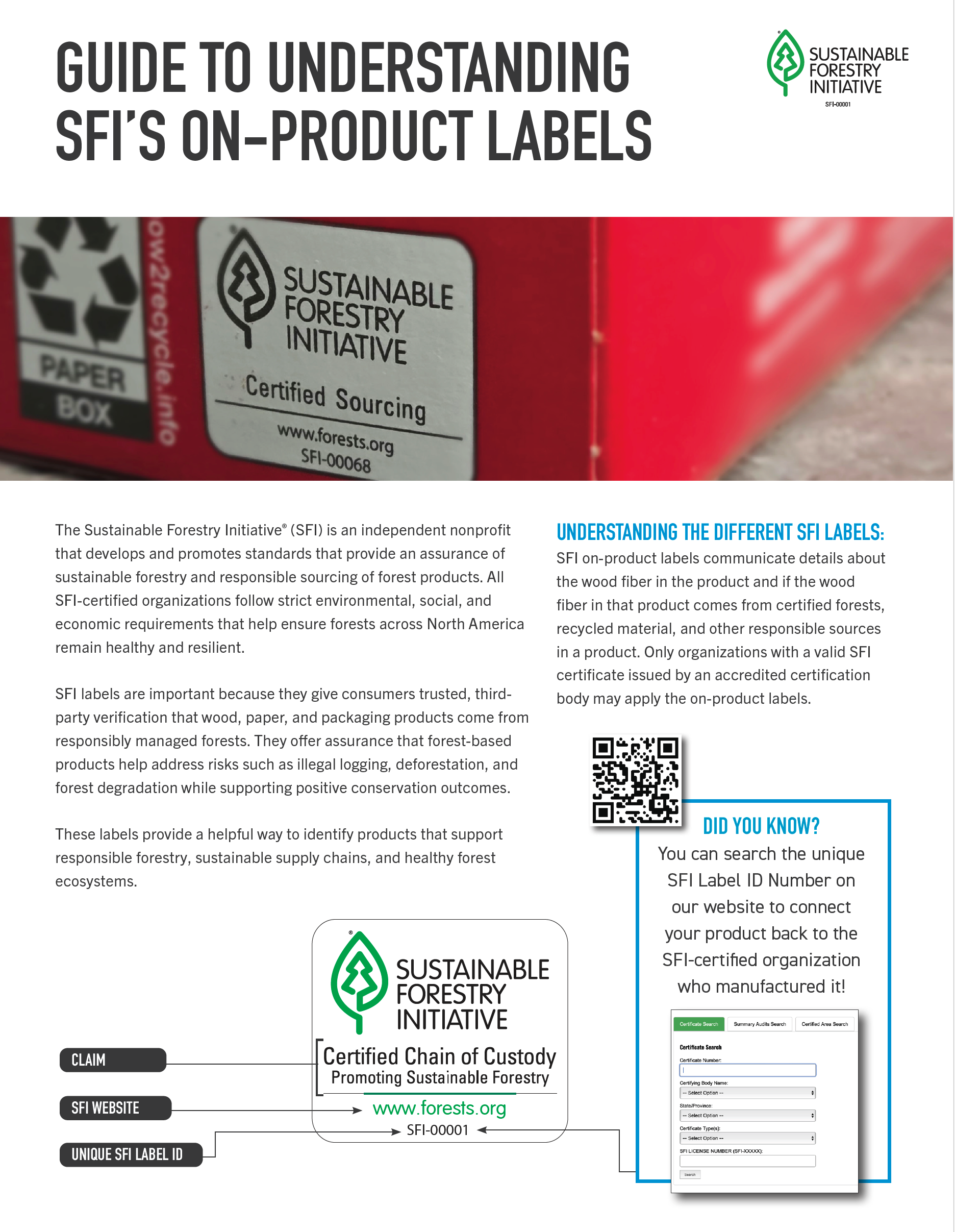
SFI labels also include a unique label identification number, allowing consumers to connect products back to the SFI-certified organization that manufactured them. This added transparency strengthens the connection between everyday purchasing decisions and responsible forestry practices.
Every forest product has a story. The SFI label tells a story of responsible management, conservation, and continuous improvement. It represents the work of forest managers, conservation professionals, researchers, manufacturers, and countless others who help keep forests healthy, productive, and resilient for generations to come.
Learn more about the SFI on-product label here.