By Elaina Cox
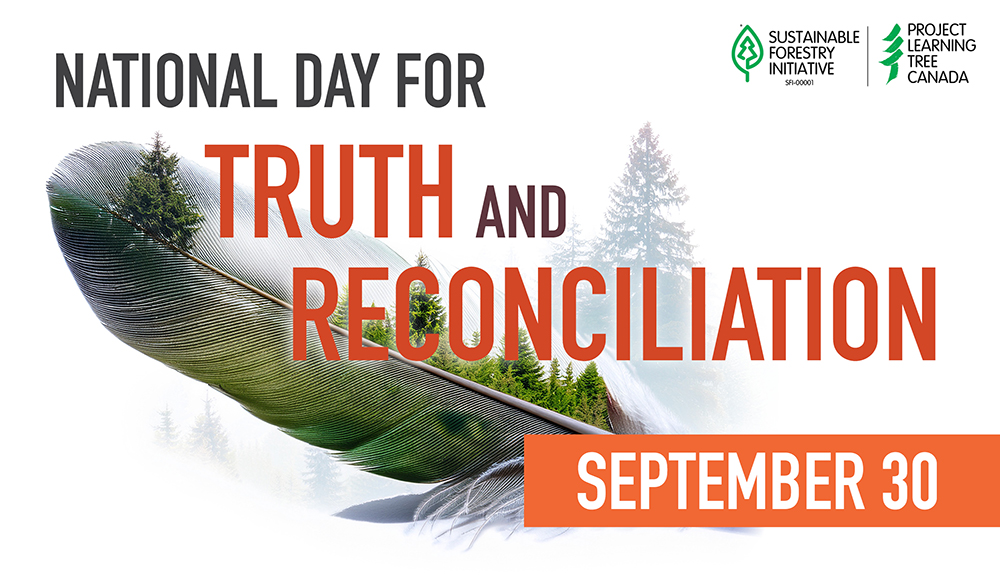 On September 30, the National Day for Truth and Reconciliation, we reflect on the history and ongoing impacts of residential schools and consider what reconciliation can look like in action.
Residential schools caused profound harm by separating Indigenous children from their families, communities, cultures, and lands. Children were often prevented from speaking their languages or practicing their traditions. As a result, generations of cultural knowledge, stories, languages, and land-based teachings were disrupted or lost.
Forests are places of culture, language, history, identity, and connection to the land. Supporting the revitalization of Indigenous Knowledges is an important part of building a stronger forestry sector.
This means:
- Creating meaningful opportunities for Indigenous leadership and participation in forestry.
- Supporting Indigenous youth pursuing education and careers in forestry and natural resource management.
- Respecting and learning from Indigenous land-based Knowledges and perspectives.
- Building long-term partnerships with Indigenous communities based on trust, respect, and shared priorities.
- Recognizing that Indigenous Knowledges are held by communities and should be shared according to their direction, protocols, and consent.
Reconciliation in forestry is about building relationships, creating opportunities, and supporting Indigenous communities in revitalizing and carrying their knowledge forward for future generations.
Today, we acknowledge our ongoing responsibility to listen, learn, build respectful relationships, recognize Indigenous Rights and Knowledges, and create meaningful opportunities for Indigenous Peoples and communities to shape the future of forestry. The Sustainable Forestry Initiative is committed to building and promoting forest-focused collaborations rooted in recognition and respect for Indigenous Peoples’ rights and Traditional Knowledges. Several outcomes in SFI’s 2025-2030 Strategic Direction, such as Increased integration of Indigenous Peoples’ Rights, Traditional Knowledges, and self-determined priorities into forest management practices and Increased collaboration with Indigenous Peoples, support this work.
Learn more
- Explore resources to start your educational journey on truth and reconciliation, including Territory Acknowledgements, the Pass System, residential schools, and more.
- Find information on land and traditional stewardship, including forest gardens, cultural burns, and the revival of traditional practices.
- Learn more about truth and reconciliation in the forest and conservation sector, including the United Nations Declaration on the Rights of Indigenous Peoples (UNDRIP) and the Truth and Reconciliation Commission of Canada’s Calls to Action.
Mental health support
Indigenous People can call The Hope for Wellness Help Line 24 hours a day, seven days a week, for counselling and crisis intervention. Call 1-855-242-3310 or chat online.